
Lyft Settles Minnesota Lawsuit After Blind Woman Denied Rides Over Service Dog
Accessibility in ride-hailing services is not just a feature, it’s a legal and ethical necessity. The case where Lyft settles Minnesota lawsuit over a service dog highlights serious gaps in rideshare accessibility. The lawsuit and subsequent settlement highlight serious concerns about discrimination, compliance, and accountability in the gig economy.
Quick Answer Box
What happened in the Lyft Minnesota lawsuit?
Lyft settled a lawsuit with the Minnesota Department of Human Rights after drivers repeatedly denied rides to a blind woman, Tori Andres, because of her service dog. The settlement includes a $63,000 payment, enhanced driver training, stricter enforcement policies, and app updates to prevent future discrimination. The agreement also mandates a 3-year monitoring period to ensure compliance.
Background of the Case
Who Is Tori Andres?
Tori Andres, a Minnesota resident who is blind, relies on her service dog Alfred for daily mobility and independence. Like many visually impaired individuals, she depends heavily on ride-hailing platforms for transportation.
However, between 2021 and 2023, Andres faced repeated ride cancellations when drivers discovered she had a service animal.
Timeline of Incidents
- Multiple ride denials occurred over a 2-year period
- At least 7 documented instances of cancellations
- Drivers canceled rides immediately after learning about the service dog
- Missed medical appointments and essential commitments
One incident involved a driver hanging up after being informed about the dog, while others canceled within minutes of arrival.
Legal Framework: Rights of Service Animal Users
Americans with Disabilities Act (ADA)
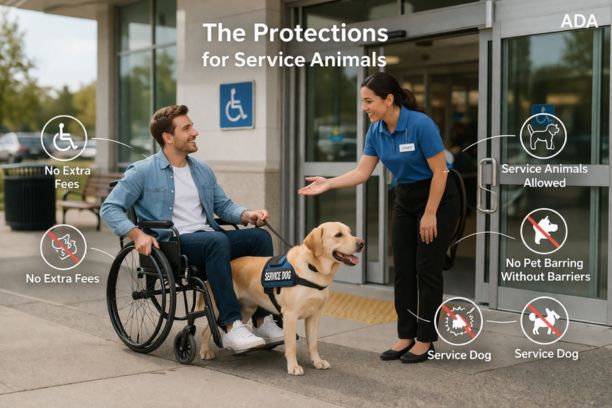
The Americans with Disabilities Act clearly states:
- Service animals must be allowed in public spaces
- Businesses cannot deny service based on disability
- No extra fees can be charged for service animals
Minnesota Human Rights Act

The Minnesota Human Rights Act expands protections at the state level:
- Prohibits discrimination in transportation services
- Applies to ride-hailing platforms like Lyft
- Holds companies accountable for service denial
What the Investigation Found
The Minnesota Department of Human Rights conducted a detailed investigation and concluded:
- Lyft drivers repeatedly refused service
- The issue was not isolated
- The denials significantly impacted Andres’ life
Key Findings:
- Pattern of discrimination
- Lack of effective enforcement of policies
- Real harm caused to a vulnerable rider
Lyft Settlement Details
Financial Compensation
Lyft agreed to pay $63,000 to Tori Andres as part of the settlement.
Policy and App Improvements
The company committed to:
- Updated driver training programs
- Clearer service animal guidelines
- App notifications educating drivers in real-time
Enforcement Measures
- Drivers violating rules face permanent deactivation
- Stronger compliance tracking
- 3-year monitoring by authorities
Quick Comparison Table: Before vs After Settlement

| Feature | Before Settlement | After Settlement |
| Driver Awareness | Limited | Mandatory Training |
| Service Animal Policy | Existing but weak | Strict Enforcement |
| App Support | Minimal guidance | Real-time alerts & updates |
| Accountability | Low | High (deactivation penalties) |
| Monitoring | None | 3-year compliance oversight |
Lyft’s Response and Defense
Lyft stated:
- It has had a service animal policy for nearly a decade
- Drivers are independent contractors
- No official admission of wrongdoing
The company emphasized that:
- Many improvements were already in place
- The settlement reinforces existing policies
Industry-Wide Impact
National Implications
According to officials, the settlement has nationwide effects:
- Updated training for all drivers across the U.S.
- Improved accessibility standards
Comparison with Uber
Uber has faced similar complaints:
- Reports of ride cancellations due to service animals
- Legal scrutiny over accessibility compliance
This case sets a precedent for the entire rideshare industry.
Challenges Faced by Disabled Riders
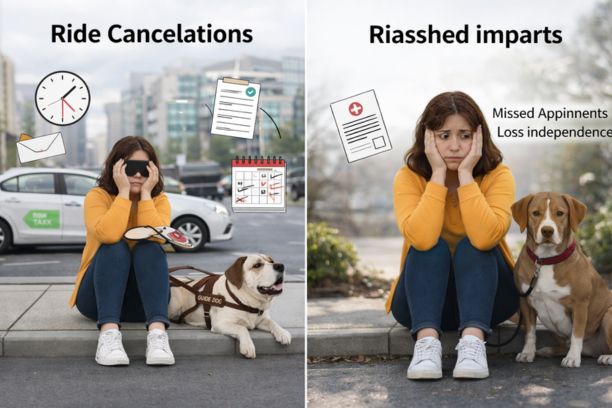
People with disabilities often face:
- Ride cancellations
- Driver bias or misunderstanding
- Delays affecting work and health
Emotional & Practical Impact:
- Anxiety and frustration
- Missed appointments
- Loss of independence
Example (Human-Centered Insight)
Imagine relying on a ride to attend a critical medical appointment, only to have it canceled multiple times because of your service dog. That’s exactly what Tori Andres experienced, seven times.
This isn’t just an inconvenience, it’s a barrier to basic rights.
Why This Case Matters
Key Takeaways:
- Accessibility is a civil right, not a privilege
- Tech platforms must ensure real-world compliance
- Policy without enforcement is ineffective
Authority Insight (Expert Perspective)
Legal experts and disability rights advocates emphasize that enforcement, not just policy, is the biggest challenge in gig economy platforms. While companies like Lyft implement guidelines, real accountability depends on driver behavior and monitoring systems. This settlement demonstrates a shift toward stricter enforcement and measurable compliance, setting a benchmark for future cases across the United States.
Key Takeaways for Readers
- Lyft paid $63,000 in settlement
- Drivers must accept service animals by law
- Stronger policies and monitoring are now in place
- Nationwide impact on rideshare accessibility
Conclusion
The Lyft Minnesota lawsuit is more than a legal case, it’s a wake-up call for the entire rideshare industry. While technology has made transportation more accessible, it must also be inclusive and equitable for everyone, especially those who rely on it the most.
This settlement signals progress, but it also raises an important question: Are policies enough without accountability?
For riders, it’s crucial to know your rights. For companies, it’s time to move beyond policies and ensure real enforcement.
If you or someone you know has faced discrimination in ride-hailing services, report it immediately and raise awareness. Change begins when voices are heard, and cases like this prove that accountability is possible.
FAQs
1. Can Lyft drivers refuse service animals?
Lyft drivers cannot refuse service animals under the ADA.
2. What is the Lyft Minnesota lawsuit about?
It involves repeated ride denials to a blind woman due to her service dog.
3. How much was the settlement?
Lyft paid $63,000 in the settlement.
4. What laws protect service animal users?
Service animal users are protected by the ADA and Minnesota Human Rights Act.
5. Can drivers ask for proof of a service animal?
Drivers cannot request proof beyond limited ADA-allowed questions.
6. What happens if a driver refuses?
Drivers who refuse may be permanently deactivated.
7. Does this apply nationwide?
Yes, Lyft updated policies across the U.S.
8. Are rideshare companies responsible?
Rideshare companies are responsible for enforcing compliance.
9. How can riders report discrimination?
Riders can report discrimination via the app or human rights agencies.
10. What qualifies as a service animal?
A service animal is a trained dog assisting a person with a disability.