Kate Middleton and the Epstein Files: What the Princess of Wales Actually Said and Why It Matters
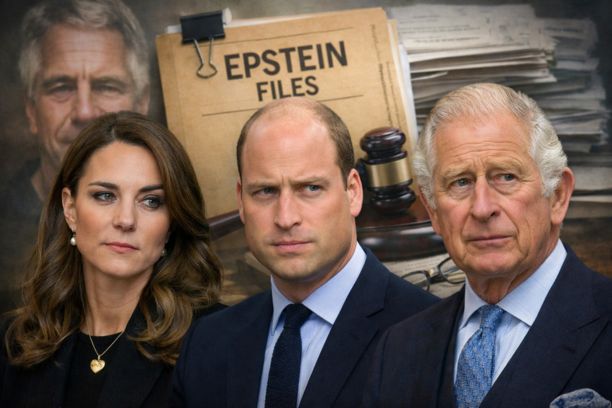
Searches linking Kate Middleton to the Epstein files have surged in recent weeks, prompting confusion and speculation online. While the Princess of Wales is not accused of any wrongdoing, her name has entered the conversation due to an official royal response to renewed scrutiny surrounding Jeffrey Epstein and individuals connected to him.
This article explains, clearly and factually, why Kate Middleton is being discussed, what the Epstein files are, what she and Prince William actually said, and how King Charles III’s response fits into the broader picture.
What Are the Epstein Files?
The term “Epstein files” refers to a large body of court documents, testimonies, flight logs, emails, and legal records connected to the late financier and convicted sex offender Jeffrey Epstein.
These documents were released or unsealed through:
- U.S. civil litigation
- Freedom of Information Act (FOIA) requests
- Court-ordered disclosures linked to Epstein’s associates
The renewed attention comes from recently unsealed materials that shed light on Epstein’s network, contacts, and movements — reigniting global scrutiny of powerful institutions and individuals who had past associations with him.
Importantly, being mentioned in documents does not equal guilt, and many names appear purely in a contextual or third-party manner.
Why the British Royal Family Is Mentioned in Epstein Coverage
The British royal family entered Epstein-related reporting primarily because of Prince Andrew, King Charles III’s brother.
Prince Andrew’s past association with Epstein — including social meetings and travel — has been widely reported for years. While Andrew has denied all allegations of criminal wrongdoing, the release of additional documents has renewed public and media interest.
As a result:
- Media coverage expanded beyond Andrew himself
- Attention turned to how the monarchy as an institution responds
- Senior royals, including Prince William and Kate Middleton, were asked to address public concern
This is the context — not direct involvement — in which Kate Middleton’s name appears.
Kate Middleton’s Position: What the Princess of Wales Actually Said
The Official Statement
Kate Middleton, alongside Prince William, issued a joint statement via Kensington Palace responding to questions about the Epstein files and their wider implications.
The statement emphasized:
- Deep concern over the revelations
- A clear focus on supporting victims
- Recognition of the seriousness of the issues raised
Notably, the statement did not mention Jeffrey Epstein by name, nor did it reference Prince Andrew directly.
This carefully worded response reflects standard royal protocol in situations involving:
- Ongoing legal sensitivity
- Family members not holding official public roles
- The need to avoid prejudicing legal processes
What Kate Middleton Did Not Say
To be absolutely clear:
- Kate Middleton is not named in the Epstein files
- She is not accused of any wrongdoing
- She did not comment on specific allegations or individuals
- She did not offer legal opinions or judgments
Her role was limited to a measured, empathetic acknowledgment of public concern — consistent with her position as Princess of Wales.
Prince William and Kate Middleton: A United Response
The decision for Prince William and Kate Middleton to speak jointly is significant.
As future King and Queen Consort, their response signals:
-
A generational shift toward public accountability
-
A focus on institutional integrity
-
An emphasis on compassion for victims rather than internal family dynamics
Royal analysts have noted that William and Kate’s approach contrasts with older traditions of silence, instead offering measured engagement without speculation.
King Charles III and the Epstein Files: A Different Approach
King Charles’s Official Position
King Charles III, as reigning monarch, addressed the issue through Buckingham Palace, taking a more institutional stance.
Key points from palace briefings include:
-
Expression of profound concern over allegations linked to Epstein
-
A willingness for the monarchy to cooperate with law enforcement, if required
-
An effort to reinforce the monarchy’s commitment to rule of law and transparency
This response reflects Charles’s role as head of state rather than a private family member.
How King Charles’s Response Differs from William and Kate’s
| William & Kate | King Charles III |
|---|---|
| Victim-focused messaging | Institutional responsibility |
| Future-facing leadership | Damage control for the monarchy |
| Limited commentary | Emphasis on cooperation with authorities |
Both approaches aim to protect public trust — but from different constitutional positions.
Why This Moment Matters for Kate Middleton
Kate Middleton has spent over a decade cultivating a public image centered on:
- Stability
- Empathy
- Non-controversial leadership
Her involvement — even indirectly — in a response to the Epstein files highlights how senior royals are now expected to acknowledge public concern, even when not personally implicated.
For many observers, Kate’s presence in the response reinforces:
- A victim-centered narrative
- Moral leadership without accusation
- A modern approach to crisis communication
Media Coverage and Public Reaction
International media coverage of “Kate Middleton and the Epstein files” has varied widely.
- Reputable outlets focused on the official statement and its wording
- Tabloid headlines often exaggerated her involvement
- Social media searches spiked despite no new allegations
This divergence underscores the importance of fact-checking and responsible reporting.
Clearing the Confusion: Is Kate Middleton Named in the Epstein Files?
No.
Here are the facts:
- Kate Middleton’s name does not appear in Epstein court documents
- She is not accused, questioned, or referenced in testimony
- Her connection is purely contextual, via an official royal response
Search trends reflect public curiosity — not evidence.
The Bigger Picture: Accountability and the Modern Monarchy
The Epstein files have forced institutions worldwide to confront uncomfortable questions about:
- Power and access
- Silence versus accountability
- How elites respond to systemic abuse
For the British monarchy, the responses from Kate Middleton, Prince William, and King Charles III suggest an evolving strategy:
- Less deflection
- More acknowledgment
- Careful, lawful communication
This shift may shape how the monarchy handles future crises.
Conclusion: What to Know — and What Not to Assume — About Kate Middleton and the Epstein Files
Kate Middleton is not involved in the Epstein scandal. Her name appears in news coverage solely because she and Prince William acknowledged public concern during a moment of renewed scrutiny surrounding the royal family.
Understanding this distinction is essential.
As interest in the Epstein files continues, separating verified facts from speculation protects both public discourse and journalistic integrity.