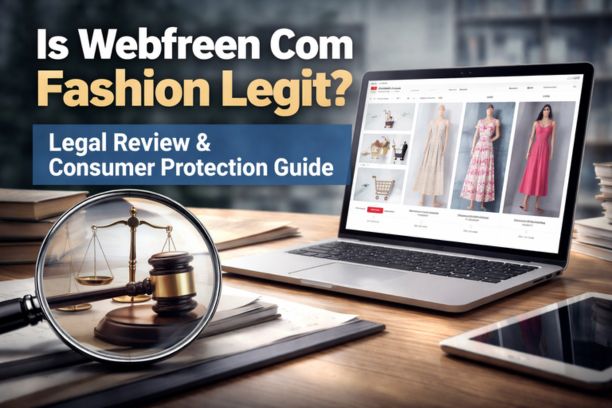
Is Webfreen Com Fashion Legit? Legal Review & Consumer Protection Guide
Online fashion shopping has made global trends accessible with a few clicks. But alongside convenience comes risk. When consumers encounter lesser-known platforms such as “Webfreen Com Fashion,” a common question arises: Is it legit?
This guide does not promote or accuse any business. Instead, it evaluates the issue from a legal and consumer protection perspective, helping readers understand how legitimacy is assessed under consumer law, e-commerce regulations, and data protection frameworks.
Disclaimer: This article is for informational purposes only and does not constitute legal advice.
What Does “Legit” Mean in Legal Terms?
In everyday language, “legit” means trustworthy. In legal terms, however, legitimacy involves compliance, transparency, and accountability.
A fashion website may be considered legally legitimate if it:
- Operates through a legally registered business entity
- Provides accurate product descriptions
- Publishes clear refund and return policies
- Complies with consumer protection and data privacy laws
- Offers secure payment processing
Legitimacy is not about popularity — it’s about compliance with applicable laws.
Business Transparency & Corporate Disclosure
One of the first legal indicators of legitimacy is corporate transparency.
1. Business Registration
A compliant e-commerce platform typically discloses:
- Legal business name
- Registered address
- Corporate registration number
- Contact details
Failure to disclose this information may make enforcement difficult if disputes arise.
2. Mandatory Website Disclosures
Under many consumer protection regimes, online sellers must clearly publish:
- Terms of Service
- Privacy Policy
- Refund & Return Policy
- Shipping timelines
- Customer support contact
In the United States, deceptive or misleading omissions may fall under the enforcement authority of the Federal Trade Commission (FTC), which regulates unfair or deceptive business practices.
Consumer Protection Laws That May Apply
The legal standards applied to an online fashion store depend on the buyer’s location.
United States
In the U.S., consumer protection law prohibits:
- False advertising
- Misrepresentation of products
- Failure to deliver goods as promised
- Hidden fees
The FTC enforces regulations against unfair trade practices. Consumers who believe they have been misled may file complaints directly with the agency.
Additionally, credit card users are often protected under federal billing dispute laws, allowing them to initiate chargebacks if goods are not delivered or materially differ from descriptions.
European Union
If the platform sells to EU residents, it may be subject to:
- Distance Selling Regulations
- 14-day withdrawal (cooling-off) rights
- Transparent pricing requirements
- Data protection compliance under the General Data Protection Regulation
Under GDPR, online retailers must:
- Obtain lawful consent for data processing
- Clearly disclose data usage
- Protect customer data through appropriate safeguards
Non-compliance can result in significant fines.
India
For Indian consumers, e-commerce businesses may fall under:
- The Information Technology Act 2000
- Consumer Protection (E-Commerce) Rules
- Consumer Protection Act, 2019
These regulations require:
- Transparent seller information
- Grievance redressal mechanisms
- No misleading advertisements
- Clear return and refund disclosures
Indian consumers may file complaints with consumer courts if disputes arise.
Common Legal Red Flags in Online Fashion Stores
When assessing whether a fashion website appears legitimate, legal analysts often look for risk indicators. These are not proof of wrongdoing — but they may warrant caution.
1. Missing or Vague Refund Policy
A legitimate retailer should clearly outline:
- Return window
- Conditions for return
- Refund processing timeline
- Who bears return shipping costs
Ambiguous or contradictory language can create consumer disputes.
2. Unrealistic Discounts
Deep discounts (e.g., 80–90% off across all products) may raise compliance questions, especially if original prices cannot be verified. Under U.S. and EU law, “fake reference pricing” may be considered misleading.
3. No Physical Address
If a website lists no business address or verifiable corporate entity, legal recourse becomes complicated in cross-border disputes.
4. Limited Customer Support
Legitimate platforms typically offer:
- Email support
- Phone support (in many jurisdictions)
- Clear dispute resolution process
Absence of customer service transparency can raise enforceability concerns.
5. Generic or Copied Terms & Conditions
Poorly drafted legal policies that appear copied from unrelated websites may indicate weak compliance oversight.
Data Privacy & Payment Security Analysis
When purchasing from any online fashion retailer, consumers share:
- Name
- Email address
- Phone number
- Shipping address
- Payment information
Legal Responsibility of Retailers
Retailers are generally required to:
- Use secure encryption (SSL)
- Protect financial data
- Disclose how data is stored and processed
- Avoid unauthorized data sharing
Failure to secure customer information may expose companies to regulatory penalties.
Intellectual Property & Fashion Law Issues
Fashion e-commerce also intersects with intellectual property law.
1. Design Copying Risks
The fashion industry frequently encounters disputes involving:
- Unauthorized duplication of designs
- Trademark misuse
- Counterfeit goods
Intellectual property systems, such as those administered by the World Intellectual Property Organization, provide international frameworks for brand protection.
In the United States, trademarks are registered and enforced through the United States Patent and Trademark Office.
If a retailer sells counterfeit products, legal consequences may affect both sellers and distributors.
What Legal Remedies Do Consumers Have?
If a consumer believes they have encountered an issue with an online fashion retailer, several remedies may be available:
1. Credit Card Chargebacks
Most card issuers allow disputes for:
- Non-delivery
- Defective products
- Unauthorized transactions
Chargebacks can often be initiated within a specified time window (typically 60–120 days depending on the issuer).
2. Filing Regulatory Complaints
Consumers may file complaints with:
- The FTC (U.S.)
- National consumer protection agencies
- Data protection authorities (EU)
- Consumer courts (India)
These agencies investigate patterns of misconduct rather than isolated dissatisfaction.
3. Small Claims Court
If jurisdiction permits, consumers may pursue compensation through small claims court, though cross-border enforcement can be complex.
4. Reporting Online Fraud
In cases involving suspected fraud, reporting to cybercrime authorities may be appropriate.
Practical Checklist: How to Verify an Online Fashion Website
For readers asking whether Webfreen Com Fashion is legit, here is a neutral legal due-diligence checklist:
✔ Check if the website uses HTTPS encryption
✔ Look for a verifiable business address
✔ Review return and refund policies carefully
✔ Search for independent reviews
✔ Confirm secure payment methods
✔ Examine whether terms & conditions appear professionally drafted
✔ Verify whether customer service is responsive
This checklist helps consumers make informed decisions regardless of the brand involved.
Risk Assessment Framework (Legal Perspective)
Instead of declaring whether any specific website is legitimate, a legal review focuses on:
- Transparency – Are disclosures clear and complete?
- Compliance – Does the site appear aligned with consumer laws?
- Data Security – Is personal information protected?
- Enforceability – Can consumers realistically seek redress?
- Jurisdiction – Where is the company legally based?
Legitimacy is ultimately determined by verified facts, regulatory compliance, and consumer experience — not marketing claims.
The Reality of E-Commerce Risk
Global e-commerce continues to grow rapidly, and with growth comes increased scrutiny. Regulators worldwide have intensified enforcement against misleading online practices.
However, it is important not to assume wrongdoing without evidence. Many smaller fashion retailers operate legally but may lack brand recognition.
Consumers should approach unfamiliar platforms with due diligence rather than assumption.
Final Verdict: Should You Be Concerned?
The question “Is Webfreen Com Fashion legit?” cannot be answered definitively without:
- Verified corporate records
- Confirmed regulatory compliance
- Transparent operational disclosures
From a legal standpoint, consumers should:
- Review policies carefully
- Understand their rights under applicable law
- Use secure payment methods
- Avoid impulse purchases without research
When transparency and compliance are evident, legal risk decreases. When they are unclear, caution is advisable.
Conclusion
Online fashion platforms operate in a complex legal environment shaped by consumer protection laws, data privacy regulations, and intellectual property frameworks.
Determining whether a specific retailer is “legit” requires careful review of:
- Business registration
- Policy transparency
- Consumer safeguards
- Legal compliance
Rather than relying on marketing claims or online rumors, consumers should use a structured legal checklist and understand their rights before purchasing.
If uncertainty remains, consulting a qualified legal professional may be appropriate.
Disclaimer
This article is provided for informational purposes only and does not constitute legal advice. Readers should consult a licensed attorney for advice regarding specific legal concerns.